In today’s competitive digital landscape, businesses are constantly searching for the most effective way to reach their audience, generate leads, and drive conversions. Two dominant strategies stand out: Instagram DM marketing vs paid ads. While both approaches offer unique advantages, choosing the right one depends on your goals, audience behavior, and engagement strategy.
Interestingly, many marketers are shifting toward more personalized communication methods. For instance, platforms like ViaDM focus on structured, manual outreach—helping businesses build genuine conversations instead of relying on automated messaging or broad ad targeting.
So, which strategy truly works better? In this blog, we’ll break down both approaches in detail, compare their effectiveness, and help you decide where to invest your time and budget.
Understanding Instagram DM Marketing
What is Instagram DM Marketing?

Instagram DM marketing involves reaching out to users directly through Instagram’s messaging feature. Unlike public posts or ads, this method focuses on one-on-one or small group conversations, making it highly personalized.
Rather than broadcasting a message to thousands, DM marketing emphasizes relationship-building.
Key Features of DM Marketing
- Direct communication with potential customers
- Personalized messaging based on user behavior
- Higher engagement rates compared to traditional ads
- Opportunity for real-time conversation and feedback
Why Businesses Prefer DM Marketing
The biggest advantage is human connection. When a user receives a thoughtful message instead of a generic ad, they are more likely to respond.
Additionally, structured tools such as those explained in this DM outreach guide help businesses organize conversations efficiently while keeping communication manual and authentic.
Understanding Paid Ads on Instagram
What are Instagram Paid Ads?
Paid ads on Instagram are sponsored posts or stories that appear in users’ feeds. These ads are powered by Meta’s advertising system and allow businesses to target specific audiences.
According to Meta Ads documentation, advertisers can target users based on demographics, interests, behaviors, and more.
Key Features of Paid Ads
- Large audience reach
- Advanced targeting options
- Scalable campaigns
- Measurable performance metrics
Why Businesses Use Paid Ads
Paid ads are ideal for:
- Brand awareness campaigns
- Product launches
- Driving website traffic
- Scaling marketing efforts quickly
However, they often lack the personal touch that DM marketing provides.
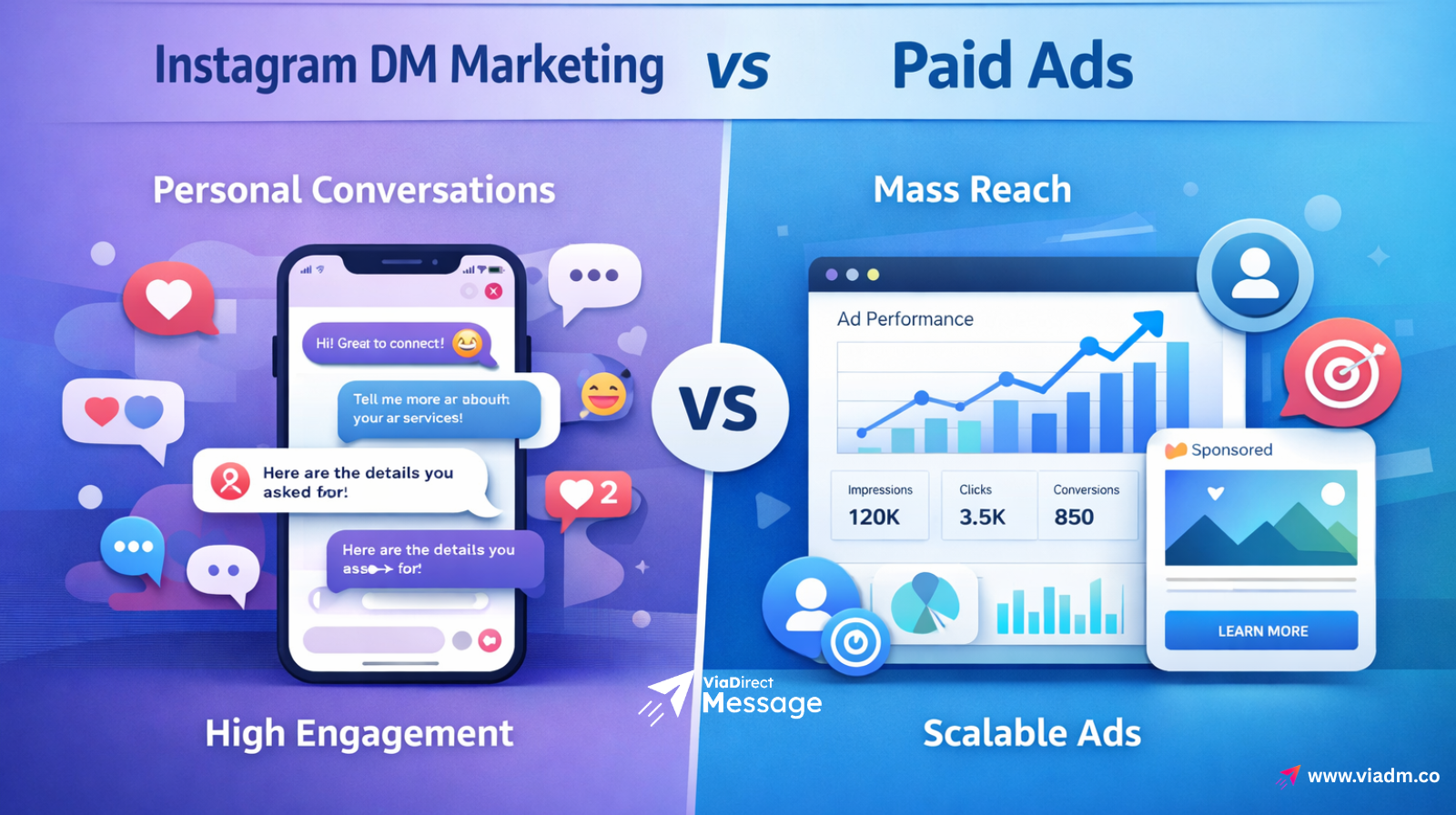
Instagram DM Marketing vs Paid Ads: A Detailed Comparison
1. Personalization vs Mass Reach
When comparing Instagram DM marketing vs paid ads, personalization is a major differentiator.
DM Marketing:
- Highly personalized
- Tailored conversations
- Builds trust quickly
Paid Ads:
- Broad targeting
- Less personal
- One-way communication
👉 If your goal is relationship-building, DM marketing clearly wins.
2. Engagement Rates

Engagement is where DM marketing shines.
- DMs encourage replies, discussions, and conversions
- Ads often result in passive engagement (likes, views)
According to HubSpot’s marketing research, personalized messaging significantly increases response rates compared to generic campaigns.
Conclusion:
DM marketing delivers deeper engagement, while ads generate surface-level interaction.
3. Cost Efficiency
Let’s talk about budget.
Paid Ads:
- Requires continuous spending
- Costs increase with competition
- ROI depends on campaign optimization
DM Marketing:
- Lower cost
- More time investment
- Higher ROI per conversation
Instead of spending thousands on impressions, DM marketing focuses on quality over quantity.
4. Conversion Rates
Conversions are the ultimate goal.
DM Marketing:
- Direct conversations lead to quicker decisions
- Builds trust before selling
- Higher conversion probability
Paid Ads:
- Indirect funnel (click → landing page → conversion)
- Drop-offs at each stage
👉 In most cases, DM marketing results in higher conversion rates, especially for service-based businesses.
5. Scalability
Here’s where paid ads dominate.
Paid Ads:
- Easily scalable
- Reach millions instantly
- Ideal for large campaigns
DM Marketing:
- Requires manual effort
- Limited scalability
- Focused targeting
However, structured workflows—like those discussed in DM strategy insights—can help businesses scale conversations without losing authenticity.
6. Trust and Relationship Building
Trust is the foundation of modern marketing.
DM Marketing:
- Builds genuine relationships
- Encourages back-and-forth interaction
- Feels human and authentic
Paid Ads:
- Often perceived as promotional
- Limited emotional connection
👉 In the debate of Instagram DM marketing vs paid ads, DM marketing clearly wins in trust-building.
When Should You Use Instagram DM Marketing?
DM marketing is ideal when:
- You want to build strong customer relationships
- You are targeting a niche audience
- Your product/service requires explanation
- You value quality over quantity
Example Use Cases
- Service-based businesses
- B2B outreach
- Influencer collaborations
- Lead nurturing
When Should You Use Paid Ads?
Paid ads are better suited for:
- Large-scale brand awareness
- E-commerce promotions
- Time-sensitive campaigns
- Rapid audience growth
Example Use Cases
- Product launches
- Seasonal sales
- App downloads
- Retargeting campaigns
Can You Combine Both Strategies?
Absolutely—and this is where real growth happens.
Instead of choosing between Instagram DM marketing vs paid ads, smart businesses combine both.
Hybrid Strategy Approach
- Use ads to attract attention
- Move interested users into DMs
- Build relationships through conversation
- Convert through personalized engagement
This approach ensures:
- Wide reach (ads)
- High conversion (DMs)
Common Mistakes to Avoid
In DM Marketing
- Sending generic or spam-like messages
- Over-automation (loses authenticity)
- Ignoring follow-ups
In Paid Ads
- Poor targeting
- Weak creatives
- No clear CTA
Avoiding these mistakes can significantly improve results regardless of the strategy you choose.
Future Trends in Instagram Marketing
The future clearly leans toward personalization and conversation.
- AI may assist targeting, but users prefer human interaction
- Messaging-based marketing is growing rapidly
- Privacy changes are reducing ad tracking effectiveness
According to Google’s consumer insights, users increasingly prefer brands that offer direct and meaningful communication.
👉 This trend strongly favors DM marketing.
Final Verdict: Instagram DM Marketing vs Paid Ads
So, what works better?
The answer depends on your objective—but here’s a clear breakdown:
- Choose DM Marketing for engagement, trust, and conversions
- Choose Paid Ads for reach and scalability
- Combine both for maximum impact
In the ongoing debate of Instagram DM marketing vs paid ads, DM marketing stands out as the more human, engaging, and conversion-driven approach, especially in today’s relationship-focused digital world.
For businesses looking to build genuine connections and improve response rates, structured manual outreach—like the approach available at ViaDM—can be a powerful addition to their marketing strategy.
Conclusion
Marketing is no longer just about visibility—it’s about connection.
While paid ads help you get noticed, Instagram DM marketing helps you build relationships that convert. Businesses that understand this balance will outperform competitors who rely solely on traditional advertising.
As digital marketing continues to evolve, one thing is clear:
Conversations are the new conversions.