In today’s digital-first world, Instagram DMs have become one of the most powerful channels for direct communication. However, there’s a thin line between a message that feels personal and one that gets ignored—or worse, reported as spam. Understanding how to write DM messages that don’t feel spammy is essential for marketers, founders, and creators who want to build genuine relationships rather than just push promotions.
Many businesses rely on manual outreach strategies to keep conversations authentic and human. Platforms like ViaDM emphasize a manual-first approach, helping users engage in meaningful interactions instead of robotic messaging. This distinction matters because audiences today are highly sensitive to anything that feels automated or insincere.
In this blog, you’ll learn proven strategies, frameworks, and practical examples to help you craft DM messages that feel natural, respectful, and effective.
Why Most DM Messages Feel Spammy
Before learning how to write DM messages that don’t feel spammy, it’s important to understand what makes them feel that way in the first place.
Lack of Personalization
Generic messages like:
“Hey, check out my service!”
instantly signal mass messaging. Users can easily tell when they are just one of hundreds.
Overly Sales-Focused Language
Jumping straight into a pitch without context creates resistance. People don’t open Instagram to be sold to—they open it to connect.
No Context or Relevance
If your message doesn’t relate to the recipient’s content, interests, or activity, it feels intrusive.
Poor Timing
Sending messages at random or in bulk without engagement history reduces response rates.
How to Write DM Messages That Don’t Feel Spammy (Step-by-Step Guide)
Let’s break down a practical framework you can follow.
1. Start With Context, Not a Pitch
The first message should never feel like a sales attempt.
Instead, reference something specific:
- Their recent post
- A story they shared
- A comment they made
Example:
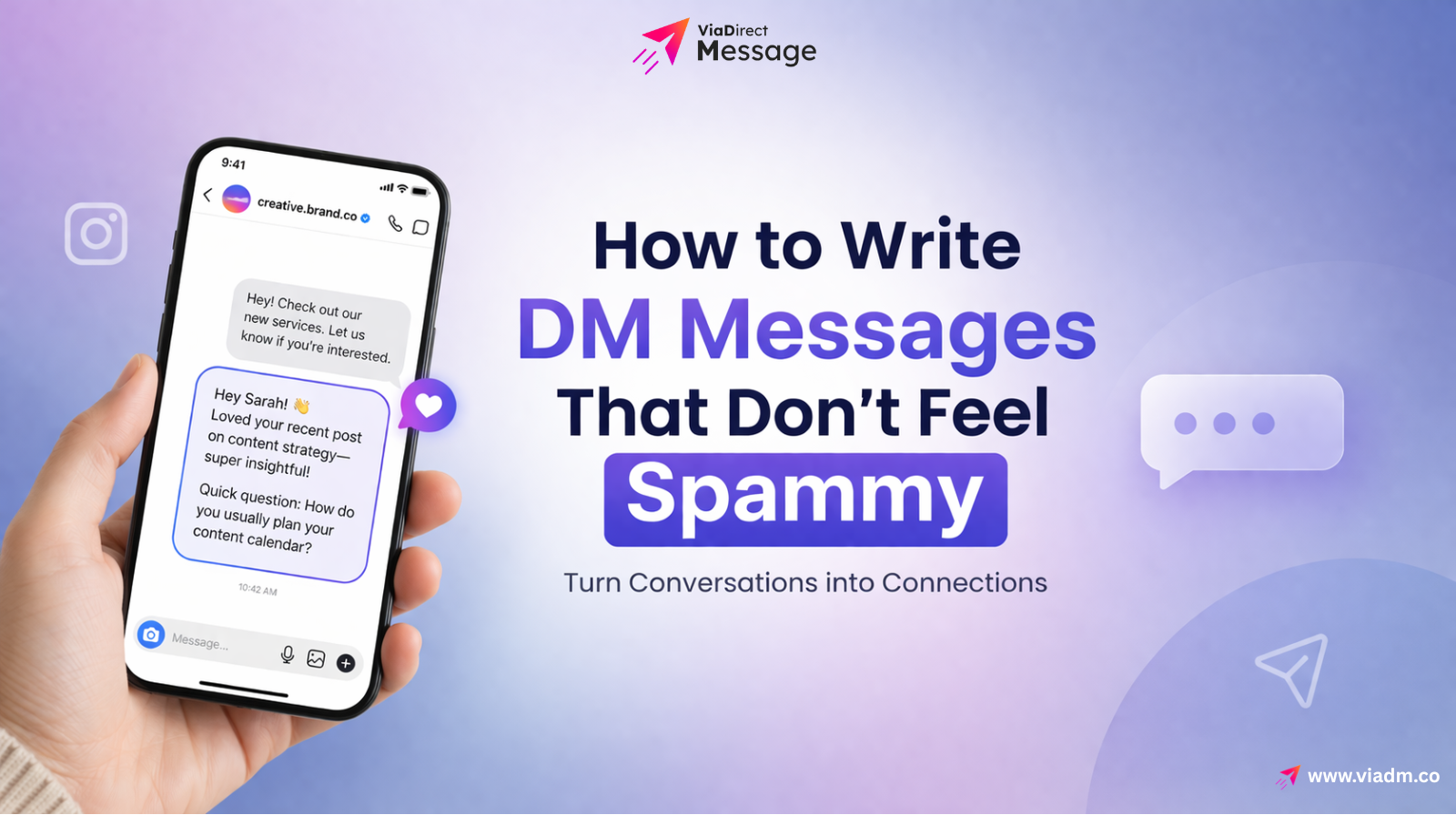
“Hey! I saw your recent post on content strategy—loved your point about consistency over perfection.”
This immediately shows effort and relevance.
2. Personalization Is Non-Negotiable
If you want to master how to write DM messages that don’t feel spammy, personalization is your strongest asset.

Ways to Personalize:
- Use their name
- Mention their niche
- Refer to specific content
According to HubSpot’s research on personalization, personalized communication significantly improves engagement rates across digital channels.
3. Keep It Conversational, Not Corporate
Avoid sounding like a formal email or ad copy.
Instead of:
“We provide high-quality services tailored to your needs…”
Try:
“Quick question—how are you currently managing your engagement strategy?”
This opens a conversation rather than pushing a pitch.
4. Focus on Value First
Before asking for anything, offer something useful.
Examples:
- Insight
- Feedback
- Suggestion
- Resource
Example:
“Noticed your reels are getting good reach—have you tried adding hooks in the first 3 seconds? It can boost retention.”
This builds trust immediately.
5. Avoid Copy-Paste Messaging
Even if you’re doing outreach at scale, avoid sending identical messages.
Manual tools and strategies help maintain authenticity. For example, exploring approaches like manual Instagram outreach strategies can help you scale conversations without losing personalization.
The Ideal Structure of a Non-Spammy DM
To simplify things, here’s a proven structure:
Step 1: Hook (Context)
Start with something relevant.
Step 2: Connection (Relatability)
Show shared interest or understanding.
Step 3: Value (Optional but powerful)
Offer something useful.
Step 4: Soft CTA (Call-to-Action)
Ask a question instead of pitching.
Example Template:
“Hey [Name], saw your post on [topic]—really liked your take on [specific point].
I’ve been exploring something similar lately.
Curious—how are you currently handling [specific problem]?”
❌ Common Mistakes to Avoid
Even experienced marketers struggle with this.
Being Too Salesy Too Soon
Avoid pitching in the first message.
Writing Long Paragraphs
Keep it short and digestible.
Ignoring Engagement Signals
Always warm up leads by liking or commenting first.
Using Spam Trigger Words
Words like “guaranteed,” “limited offer,” or “earn fast” reduce credibility.
For more insights into digital communication etiquette, resources like Google’s Search Central guidelines emphasize creating helpful, user-first content—which applies equally to messaging.
The Psychology Behind Non-Spammy Messaging
Understanding human behavior helps you improve your approach.
People Respond to:
- Authenticity
- Relevance
- Respect
People Ignore:
- Pressure
- Generic outreach
- Aggressive selling
When you focus on relationships instead of transactions, your response rate improves naturally.
How Manual Outreach Improves DM Quality
Automation often sacrifices quality for scale. That’s why many professionals prefer manual engagement.
Benefits of Manual Messaging:
- Better personalization
- Higher response rates
- Stronger relationships
- Lower risk of account issues
Using structured but manual workflows ensures your messages stay human. Many marketers refine their outreach by combining strategy with tools like Instagram DM growth workflows, which focus on meaningful engagement rather than automation.
Real Examples: Spammy vs Non-Spammy DMs
❌ Spammy Version:
“Hey! We help businesses grow. Let’s connect!”
✅ Improved Version:
“Hey! I came across your profile through your reel on branding—really liked your design style.
Quick question—do you handle client acquisition yourself or through referrals?”
❌ Spammy Version:
“Buy our service. Limited offer.”
✅ Improved Version:
“Hey, noticed you’re consistently posting—great consistency!
Have you explored ways to convert that engagement into leads?”
Advanced Tips for Better DM Conversations

Once you understand how to write DM messages that don’t feel spammy, you can level up with these strategies:
1. Use Micro-Commitments
Instead of asking for a call, ask a small question.
2. Follow Up Smartly
Wait 2–3 days and follow up naturally:
“Hey, just wanted to check if you saw my message—no worries if not!”
3. Match Their Tone
If they are casual, be casual. If they’re professional, adjust accordingly.
4. Build Before You Pitch
Engage with their content for a few days before messaging.
When to Introduce Your Offer
Timing is everything.
Only introduce your service when:
- The conversation is active
- The user shows interest
- There is a clear problem you can solve
Example Transition:
“That makes sense. Actually, I’ve been working on something similar—happy to share if you’re interested.”
This feels natural, not forced.
Measuring DM Success
To improve continuously, track:
- Response rate
- Conversation rate
- Conversion rate
- Drop-off points
Manual outreach allows you to adapt quickly based on real conversations.
Final Thoughts
Mastering how to write DM messages that don’t feel spammy is less about clever wording and more about genuine intent. People can easily sense whether you’re trying to help or just sell.
When you focus on personalization, context, and value, your messages naturally stand out. Instead of chasing conversions, build conversations—and conversions will follow.
A thoughtful, manual approach to DM outreach not only improves engagement but also builds long-term trust. If you’re serious about improving your messaging strategy, exploring structured yet human-focused methods like those offered through ViaDM’s outreach approach can help you maintain quality while scaling your efforts.