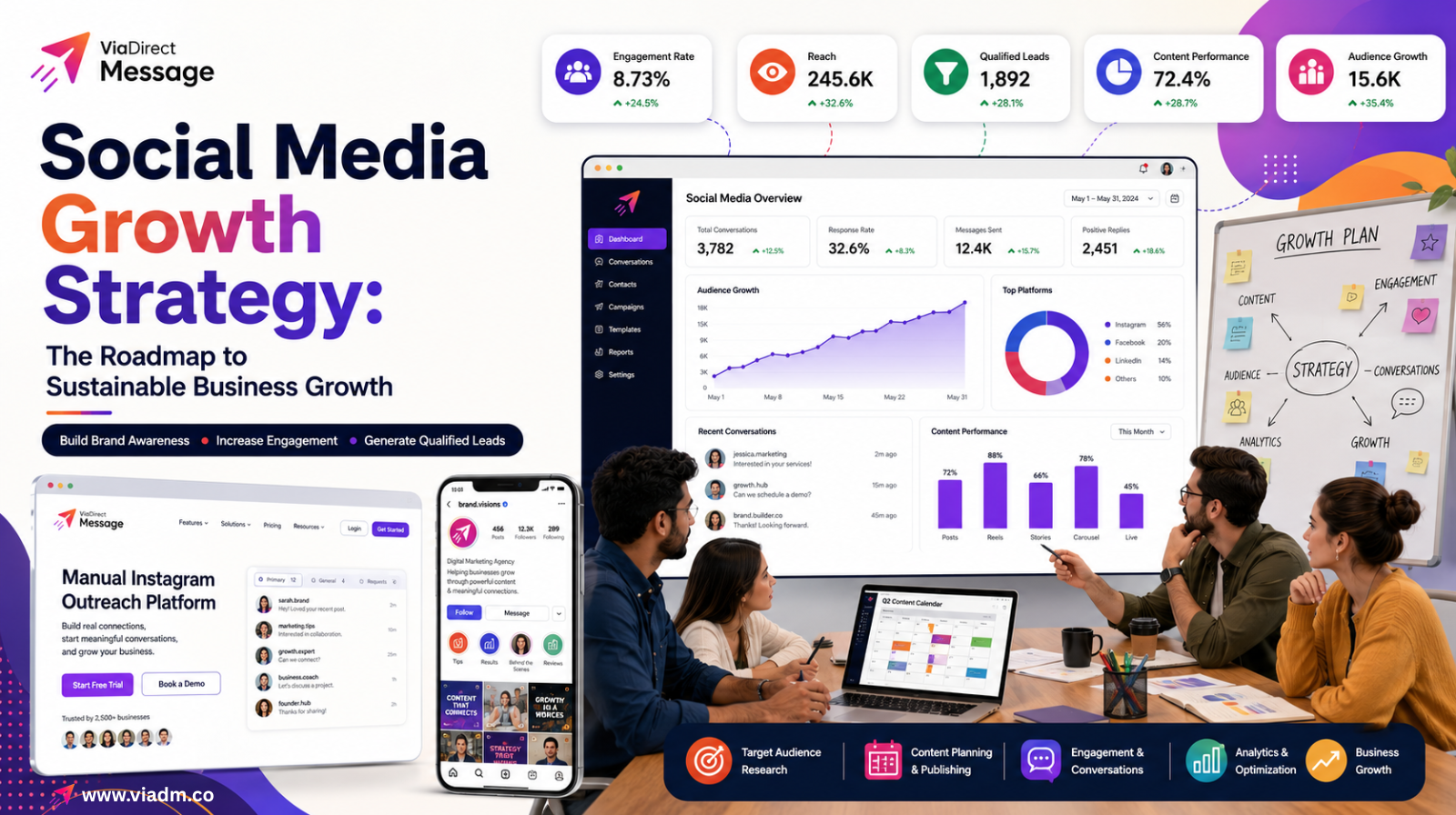
Social media is no longer just a place where brands share updates or publish promotional content. It has become one of the most effective channels for building relationships, generating qualified leads, strengthening customer loyalty, and increasing long-term revenue. However, achieving consistent growth requires much more than posting attractive visuals or following viral trends. A successful Social Media Growth Strategy combines audience research, content planning, meaningful engagement, analytics, and personalized communication.
Businesses that invest in relationship-driven marketing often experience stronger customer retention and higher engagement because they focus on conversations instead of simply chasing vanity metrics.
If you’re looking to improve customer engagement through Instagram conversations, exploring solutions like the Instagram Direct Messaging Platform can help businesses organize personalized outreach while keeping every conversation manual and authentic rather than automated.
This guide explains how to create a sustainable social media growth strategy that attracts the right audience, increases engagement, and converts followers into loyal customers.
Why Every Business Needs a Social Media Growth Strategy
A social media account without a strategy usually produces inconsistent results. Businesses often post regularly but fail to generate meaningful engagement because every post lacks a defined objective.
A structured Social Media Growth Strategy helps businesses:
- Increase brand visibility
- Build trust with potential customers
- Generate qualified leads
- Improve customer retention
- Strengthen brand authority
- Create predictable marketing results
Instead of asking, “How do we get more followers?” successful businesses ask:
- How do we attract the right audience?
- How do we build relationships?
- How do we encourage conversations?
- How do we convert engagement into business growth?
Those questions create a completely different marketing approach.
Understanding Your Target Audience
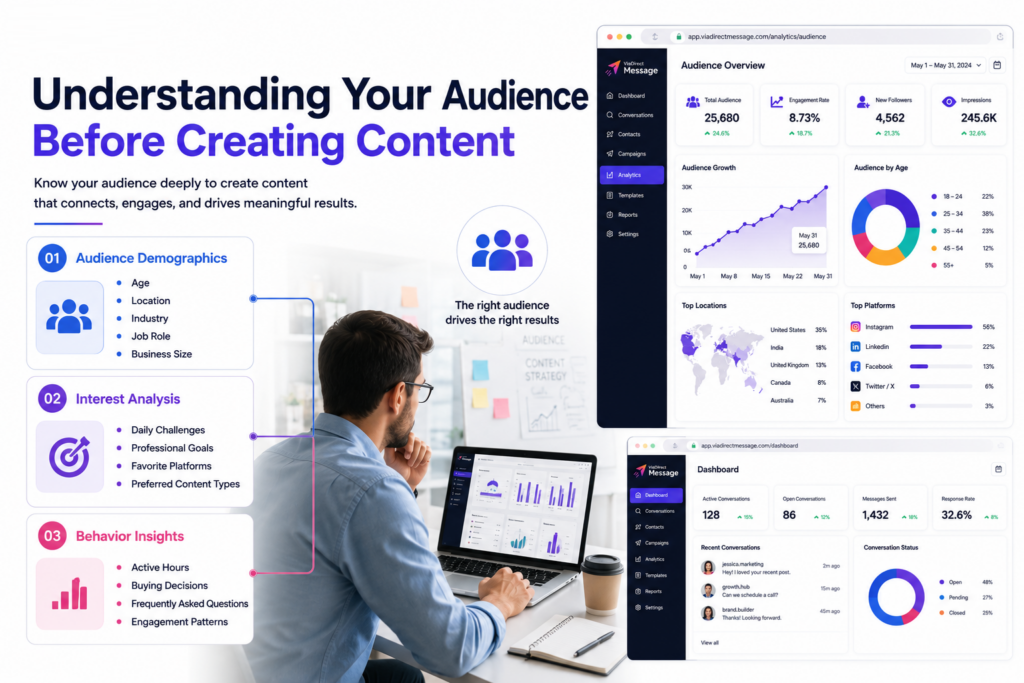
The most successful social media campaigns begin with audience research.
Before publishing content, businesses should understand:
Audience Demographics
- Age
- Location
- Industry
- Job role
- Business size
Customer interests
- Daily challenges
- Professional goals
- Preferred content formats
- Favorite platforms
Customer behavior
- Active hours
- Purchasing decisions
- Frequently asked questions
- Engagement patterns
Creating customer personas allows marketers to produce content that feels relevant instead of generic.
Define Clear Growth Goals
Every social media strategy should include measurable objectives.
Examples include:
| Goal | KPI |
|---|---|
| Increase brand awareness | Reach & impressions |
| Build community | Engagement rate |
| Generate leads | Qualified conversations |
| Improve customer support | Response time |
| Increase website traffic | Click-through rate |
| Boost sales | Conversion rate |
Clear objectives make performance measurement much easier.
Build a Strong Content Strategy
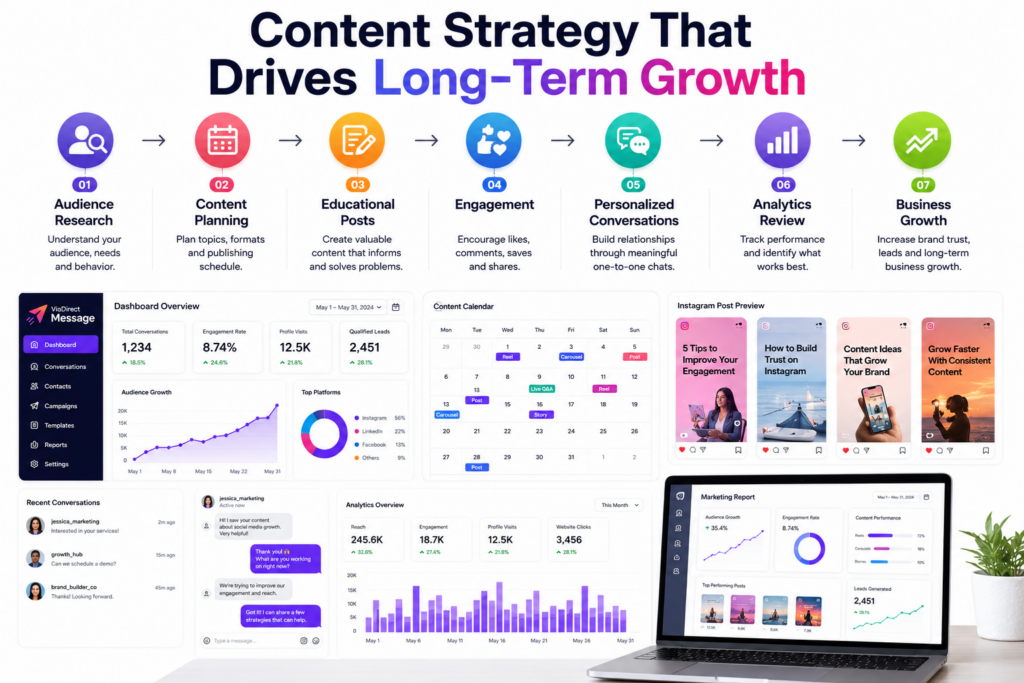
Content remains the foundation of social media growth.
Instead of publishing random updates, create content that serves specific customer needs.
Educational Content
Educational posts establish authority.
Examples include:
- Industry tips
- Tutorials
- Best practices
- Common mistakes
- Step-by-step guides
Educational content tends to generate saves and shares.
Problem-Solving Content
Customers follow brands that solve problems.
Address questions like:
- How can businesses improve engagement?
- What causes declining reach?
- How should brands communicate with customers?
Helpful content builds credibility over time.
Storytelling Content
Stories make businesses memorable.
Share:
- Customer success stories
- Team experiences
- Product development journeys
- Lessons learned
Authentic storytelling strengthens emotional connections.
Interactive Content
Encourage participation through:
- Polls
- Questions
- Quizzes
- Live sessions
- Community discussions
Interactive content often increases organic visibility.
The Role of Personalized Conversations
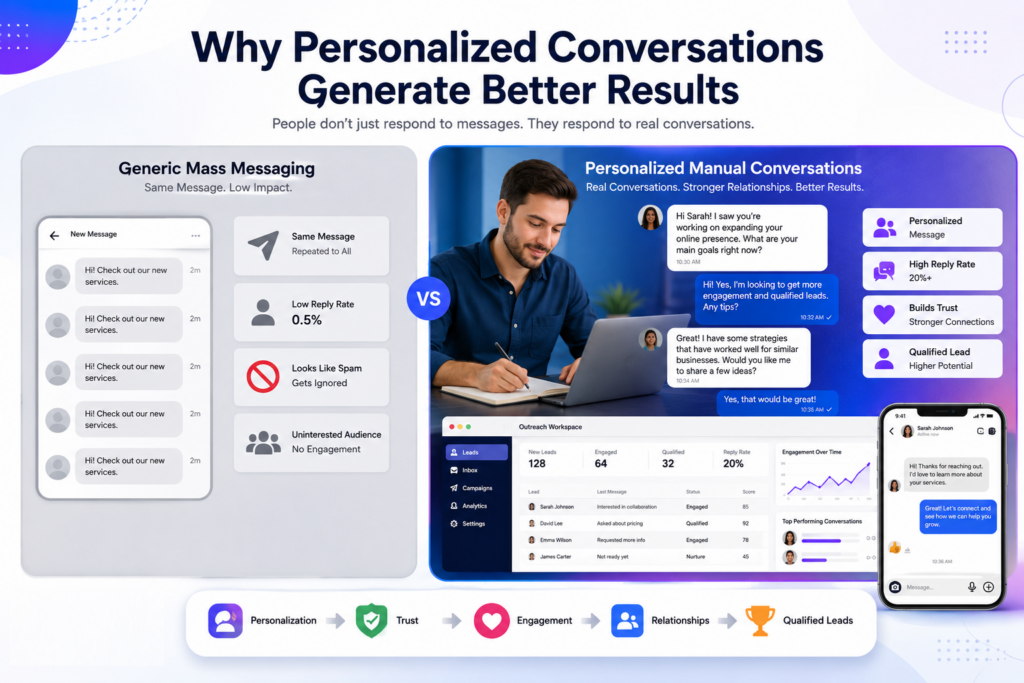
Content attracts attention.
Conversations build relationships.
Businesses that respond personally rather than relying on generic responses often create stronger customer trust.
For Instagram-focused businesses, maintaining personalized manual conversations is especially important. Platforms that support organized outreach without replacing human interaction help teams manage communication more effectively. For example, businesses exploring Instagram outreach best practices can discover practical ways to improve engagement while keeping conversations authentic.
It’s important to understand that personalized outreach does not require automation. Manual messaging allows businesses to tailor every conversation according to customer intent, making interactions feel genuine and increasing the likelihood of meaningful responses.
Consistency Beats Virality
Many businesses chase viral posts.
Successful brands focus on consistency.
A realistic publishing schedule may include:
- Three educational posts weekly
- One customer story
- One video
- Daily Stories
- Community engagement every day
Consistency builds audience expectations.
Optimize Every Social Media Profile
Your profile serves as a landing page.
Optimize:
Profile photo
Use a professional brand logo.
Bio
Clearly explain:
- What you do
- Who you help
- Why customers should care
Link
Direct visitors toward:
- Website
- Landing page
- Product page
Contact information
Ensure customers can reach you easily.
Create Platform-Specific Content
Each social platform has unique user behavior.
- Reels
- Stories
- Carousels
- Personalized conversations
- Thought leadership
- Industry insights
- Case studies
- Community discussions
- Events
- Customer groups
X
- Industry news
- Quick updates
- Discussions
Repurposing content is helpful, but avoid posting identical content across every platform.
Data-Driven Decision Making
A successful Social Media Growth Strategy relies on analytics.
Track:
- Reach
- Engagement
- Saves
- Shares
- Comments
- Profile visits
- Website clicks
- Conversion rate
Instead of celebrating follower growth alone, measure actions that contribute to business objectives.
According to the Content Marketing Institute and Google’s Search Central documentation, businesses that regularly analyze performance data tend to refine their marketing decisions more effectively and improve long-term content performance.
Real Campaign Example
Consider a small consulting business that struggled to generate inquiries despite posting every day.
After reviewing audience behavior, the team made several changes:
- Reduced promotional posts
- Increased educational content
- Published customer success stories
- Responded personally to every inquiry
- Shared valuable resources instead of direct sales pitches
Within three months:
- Engagement increased significantly.
- Website traffic improved.
- Qualified conversations increased.
- Sales inquiries became more consistent.
The growth did not come from posting more content—it came from posting more relevant content and building genuine relationships.
Original Research Framework
Based on common performance patterns observed across numerous business-focused social media campaigns, brands that combine educational content, consistent publishing, and personalized conversations generally achieve stronger engagement than those relying primarily on promotional content.
Typical trends include:
| Strategy | Typical Result |
| Educational content | Higher saves and shares |
| Personalized messaging | Better reply rates |
| Customer stories | Improved trust |
| Consistent publishing | Stable audience growth |
| Analytics review | Better optimization |
While results vary by industry, these practices consistently appear among high-performing brands.
Pricing Comparison: Organic vs Paid Growth
| Strategy | Initial Cost | Long-Term Value |
| Organic content | Low | High |
| Paid advertising | Medium to High | Depends on budget |
| Influencer campaigns | Medium | Variable |
| Personalized outreach | Low to Medium | High |
| Community building | Low | Very High |
A balanced strategy often combines several approaches rather than relying on a single tactic.
Common Mistakes That Slow Growth
Avoid these mistakes:
- Posting without a content calendar
- Ignoring audience feedback
- Chasing every trend
- Buying followers
- Publishing only promotional posts
- Not measuring performance
- Inconsistent branding
- Slow response times
These issues often reduce both engagement and customer trust.
Frequently Asked Questions
How long does social media growth take?
Most businesses begin seeing measurable improvements after several months of consistent execution. Sustainable growth requires patience and continuous optimization.
Should every business use the same strategy?
No.
Every audience behaves differently. Strategies should be customized according to industry, goals, and customer behavior.
Which metrics matter most?
Focus on:
- Engagement
- Qualified leads
- Website traffic
- Customer conversations
- Conversion rate
- Customer retention
These metrics reflect business impact more accurately than follower count alone.
Is personalized messaging better than mass messaging?
In many situations, personalized communication builds stronger trust because customers feel they are interacting with a real person rather than receiving a generic message. Maintaining authentic manual conversations is especially valuable for relationship-based marketing.
Should businesses rely only on organic growth?
Organic growth creates a strong long-term foundation, while paid campaigns can accelerate visibility. Combining both approaches often delivers the best overall results.
Final Thoughts
A successful Social Media Growth Strategy is built on consistency, valuable content, audience understanding, and meaningful relationships—not shortcuts. Businesses that educate, engage, analyze performance, and communicate authentically are more likely to achieve sustainable growth over time.
Whether your goal is increasing brand awareness, generating qualified leads, or strengthening customer relationships, remember that every interaction contributes to long-term success. For businesses focused on Instagram relationship marketing, resources such as the ViaDM platform provide guidance for organizing manual, personalized outreach while keeping human conversations at the center of every customer interaction. Because authentic communication builds trust, a manual approach often creates stronger and more lasting business relationships than impersonal mass messaging.