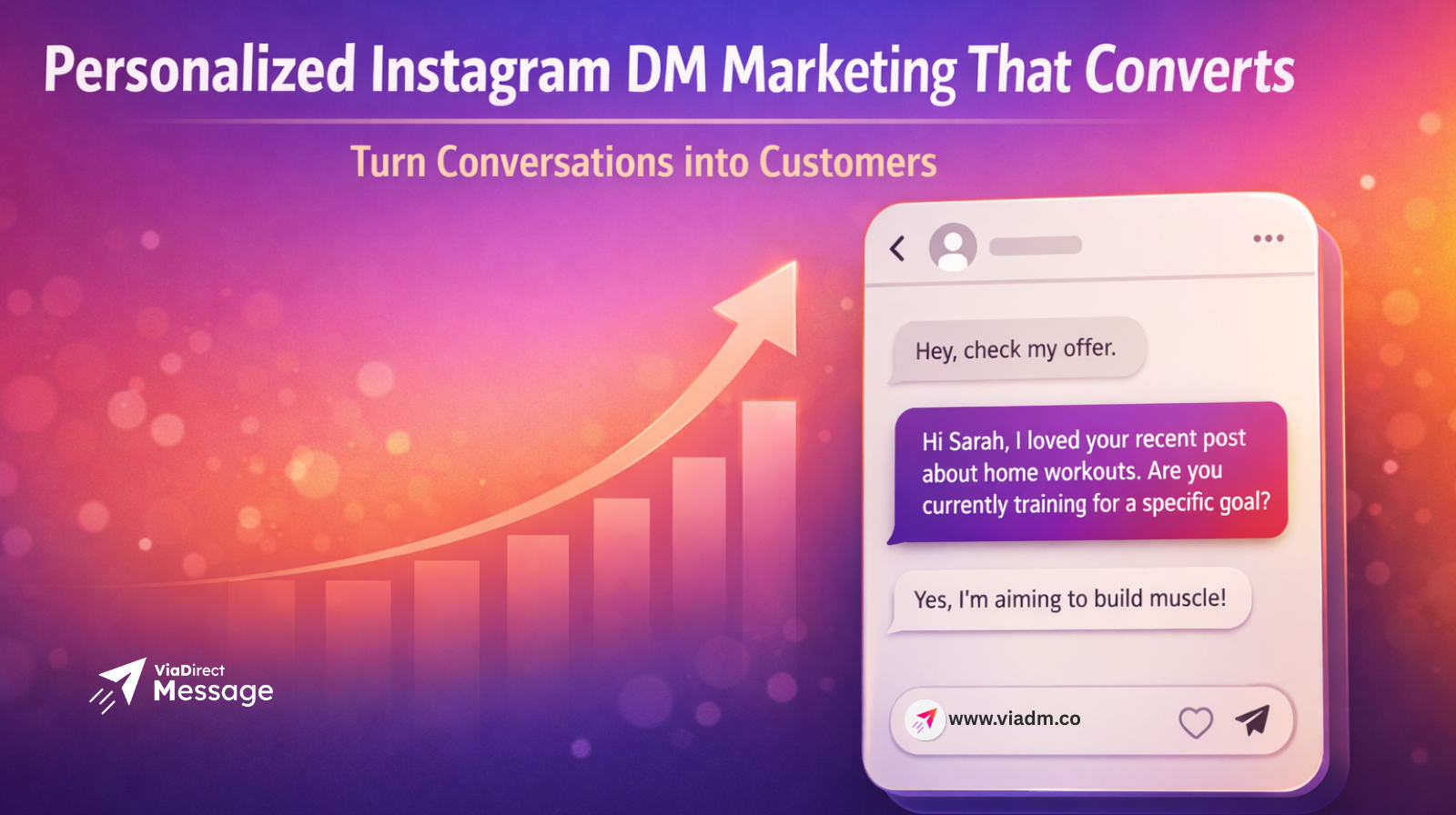
Instagram has evolved far beyond a simple photo-sharing platform. Today, it is a powerful business communication channel where brands interact directly with their audience. Among all engagement methods, personalized DM conversations for business growth have become one of the most effective strategies for building relationships, nurturing leads, and converting followers into loyal customers.
Businesses that want to implement structured and organized outreach strategies often rely on tools designed to manage conversations responsibly. Platforms like ViaDM help teams organize Instagram conversations and manage outreach workflows in a structured way while keeping communication human and personalized rather than automated.
In an era where consumers expect authenticity and instant interaction, personalized direct messaging helps businesses stand out. Instead of sending generic messages, brands can build meaningful connections that drive long-term growth.
This article explores how personalized DM conversations for business growth work, why they matter, and how businesses can use them effectively to create stronger engagement and higher conversions.
Why Personalized DM Conversations Matter for Modern Businesses
Social media platforms are crowded with promotional content. As a result, many users simply scroll past traditional marketing messages. However, direct messaging creates a different dynamic.
A DM is a private, one-to-one interaction, which makes it far more personal than public posts or ads.
According to research from HubSpot’s marketing statistics, consumers are more likely to engage with brands that communicate directly and respond quickly. Personalized communication builds trust, improves customer satisfaction, and strengthens brand relationships.
When businesses start personalized DM conversations for business growth, they gain several advantages:
- Direct communication with potential customers
- Higher engagement compared to traditional posts
- Faster lead nurturing
- Opportunity to answer questions instantly
- Stronger relationship building
Instead of relying solely on broadcast marketing, companies can create real conversations with their audience.
The Psychology Behind Personalized Messaging
Personalized messaging works because it taps into basic human psychology.
People naturally respond better when communication feels specific, relevant, and human. Generic outreach often feels like spam, while personalized messages feel like genuine conversations.
Key psychological factors include:
1. Personal Recognition
When someone receives a message that references their interests, profile, or recent activity, it signals that the sender actually paid attention.
This simple recognition increases the chances of engagement.
2. Relevance
Messages tailored to a user’s interests or needs are far more likely to be read and responded to.
For example:
- Mentioning a recent post they shared
- Referring to their business niche
- Responding to a story or comment
3. Trust Building
Trust grows when conversations feel natural rather than scripted.
Because of this, businesses increasingly prefer manual outreach systems that help teams organize conversations while maintaining authenticity.
Understanding the Role of Personalized DM Conversations for Business Growth
Personalized messaging is not just about saying “Hi.” It involves a structured communication strategy designed to nurture relationships over time.
When implemented correctly, personalized DM conversations for business growth can help businesses:
- Generate qualified leads
- Build customer trust
- Increase brand loyalty
- Convert followers into clients
- Maintain ongoing engagement
Unlike paid advertising, which stops delivering results once the budget runs out, relationship-driven messaging can create long-term customer connections.
Manual Outreach vs Automation in DM Marketing
Many businesses initially look for automation tools to send large numbers of messages. However, automation can often lead to problems such as spam filters, account restrictions, or impersonal communication.
Manual outreach, on the other hand, focuses on authentic conversations.
Structured platforms that support manual messaging workflows help teams stay organized without sacrificing personalization. For example, some platforms provide conversation management features that allow businesses to track leads, categorize conversations, and maintain structured outreach while keeping communication human.
This approach aligns with Instagram’s guidelines and ensures that outreach remains genuine rather than robotic.
For developers and marketers who want to understand platform guidelines, resources like Meta’s developer documentation provide insights into messaging policies and platform limitations.
Key Benefits of Personalized DM Conversations
1. Higher Engagement Rates
Direct messages receive significantly higher open rates compared to emails or ads.
When a message feels personal, users are far more likely to read it and respond.
2. Faster Lead Qualification
A DM conversation allows businesses to quickly identify whether someone is interested in their service.
Instead of waiting for form submissions or email responses, businesses can immediately ask relevant questions.
3. Real Relationship Building
Personalized conversations allow brands to build genuine relationships rather than transactional interactions.
Over time, these relationships lead to:
- repeat customers
- referrals
- stronger brand loyalty
4. Improved Customer Support
DM conversations are not just for sales. They can also help businesses provide fast and helpful support.
When customers know they can easily message a brand, it increases confidence and trust.
How to Start Personalized DM Conversations Effectively
Starting a conversation is often the most challenging part of DM outreach. The goal is to make the message feel natural and relevant.
Below are some proven approaches.
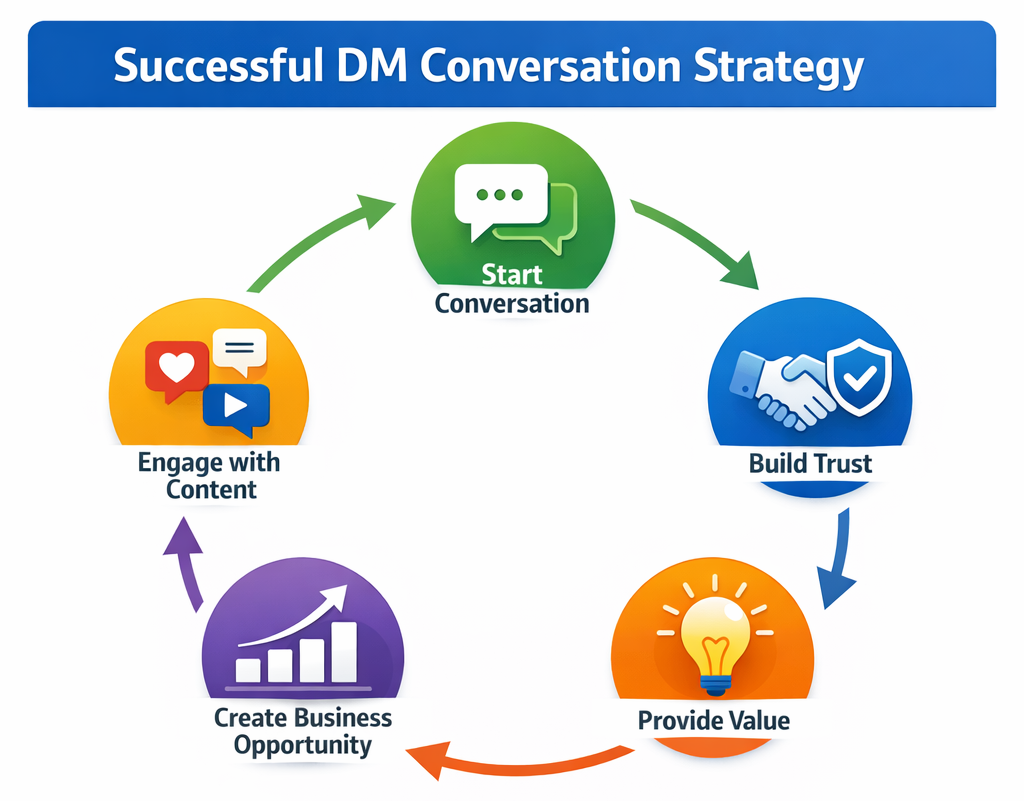
1. Engage with Content First
Before sending a message, interact with the user’s content.
For example:
- Like their posts
- Respond to stories
- Leave meaningful comments
This creates familiarity before the conversation begins.
2. Reference Something Specific
Generic messages rarely work. Instead, reference something from the person’s profile.
Example:
- A recent post they shared
- Their business niche
- A story they uploaded
This instantly makes the message feel more personal.
3. Keep the First Message Simple
Avoid long introductions or sales pitches.
A simple conversation starter works better.
Examples:
- “Loved your recent post about digital marketing strategies. What inspired it?”
- “I noticed you’re working in web development. How has your experience been with modern frameworks lately?”
The goal is to start a conversation, not close a sale immediately.
Structuring DM Outreach for Consistent Results
As outreach grows, managing conversations manually without structure becomes difficult. Businesses often need systems that help them track conversations, follow up with leads, and organize outreach workflows.
Structured DM management systems can help teams:
- categorize conversations
- manage lead pipelines
- track message responses
- maintain organized outreach
For example, some platforms provide features specifically designed to help teams manage structured DM workflows while keeping conversations human and relevant. A breakdown of these features can be explored on pages like ViaDM features which explain how teams manage structured outreach without relying on automation.
By using structured workflows, businesses can maintain personalization while scaling their communication efforts.
Best Practices for Personalized DM Conversations
To ensure success, businesses should follow several key principles.
Focus on Conversations, Not Sales
The biggest mistake in DM outreach is trying to sell too quickly.
Instead:
- build rapport
- ask questions
- understand the user’s needs
Sales naturally follow when trust is established.
Avoid Copy-Paste Messaging
Even if templates are used internally, messages should always be slightly customized.
Small changes make a big difference.
Maintain a Human Tone
Messages should feel like they are coming from a real person.
Avoid corporate language or overly formal communication.
Respect User Boundaries
Not everyone will respond, and that is completely normal.
If someone does not reply, avoid sending excessive follow-ups.
Professional outreach always respects the user’s time and interest.
Common Mistakes Businesses Make in DM Outreach
Many companies fail with DM marketing because they approach it incorrectly.
Here are the most common mistakes.
Sending Mass Generic Messages
This approach often leads to spam complaints or account restrictions.
Pitching Too Early
Jumping directly into a sales pitch can make the conversation feel transactional.
Ignoring Context
Messages that ignore the user’s profile or interests appear lazy and insincere.
Poor Conversation Management
Without a structured system, businesses often lose track of leads and conversations.
Turning Conversations Into Business Opportunities
Once a conversation is established, businesses can gradually introduce value.
Examples include:
- sharing helpful resources
- offering advice related to the user’s niche
- recommending solutions to problems they mentioned
When value comes first, the conversation naturally transitions into potential collaboration or business opportunities.
Personalized DM conversations work best when they are treated as relationship-building channels rather than aggressive sales tactics.
The Future of DM-Driven Business Communication
Messaging platforms are becoming central to digital communication.
Consumers increasingly prefer private conversations over public interactions. As a result, direct messaging is expected to play an even larger role in marketing strategies.
Several trends are shaping the future:
- conversational marketing strategies
- personalized engagement
- relationship-driven outreach
- integrated conversation management systems
Businesses that adopt personalized DM conversations for business growth today will be better positioned for the evolving digital communication landscape.
Conclusion
In today’s relationship-driven digital economy, businesses cannot rely solely on traditional marketing tactics. People want authentic communication, meaningful engagement, and real conversations with brands.
This is where personalized DM conversations for business growth become extremely powerful.
By focusing on genuine interactions, businesses can:
- build trust with their audience
- nurture long-term relationships
- convert followers into customers
Structured outreach systems can help teams manage conversations efficiently while preserving authenticity. Platforms such as ViaDM demonstrate how businesses can organize DM outreach workflows while keeping communication personal and human.
Ultimately, the goal of DM marketing is not just to send messages—it is to build relationships that drive sustainable business growth.