The way people discover businesses online is changing rapidly. For years, Search Engine Optimization (SEO) has been the primary strategy for improving online visibility. Businesses invested heavily in ranking on Google, creating optimized content, and earning backlinks to attract organic traffic.
Today, however, a new layer of digital visibility has emerged: Generative Engine Optimization (GEO).
With the rise of AI-powered search experiences such as ChatGPT, Google AI Overviews, Gemini, Microsoft Copilot, and Perplexity, users are increasingly receiving direct answers instead of traditional lists of search results. This shift is transforming how brands get discovered online.
As a result, marketers, business owners, SaaS companies, agencies, and content creators are asking an important question:
GEO vs SEO: What’s the difference, and which one matters more?
The answer is simple: both matter.
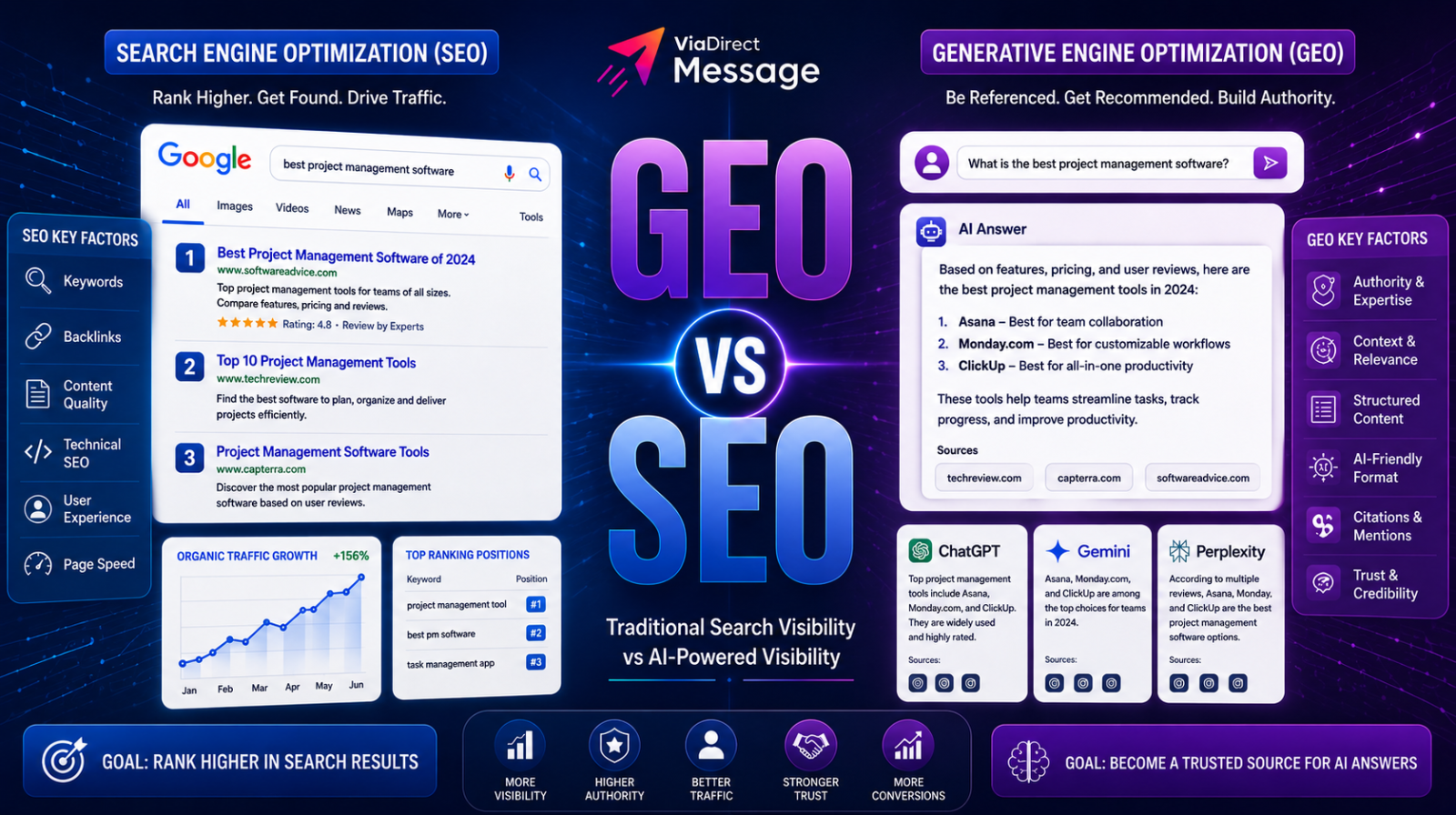
SEO helps people find your website through search engines, while GEO helps AI systems recognize, cite, and recommend your content when generating answers.
In this guide, you’ll learn how GEO and SEO work, how AI search is reshaping digital marketing, and why businesses need both strategies to remain visible in the future.
What Is SEO?
Search Engine Optimization (SEO) is the process of improving a website’s visibility in traditional search engines such as Google and Bing.
The goal of SEO is to help your pages rank higher in search results for relevant keywords, driving organic traffic to your website.
How SEO Works
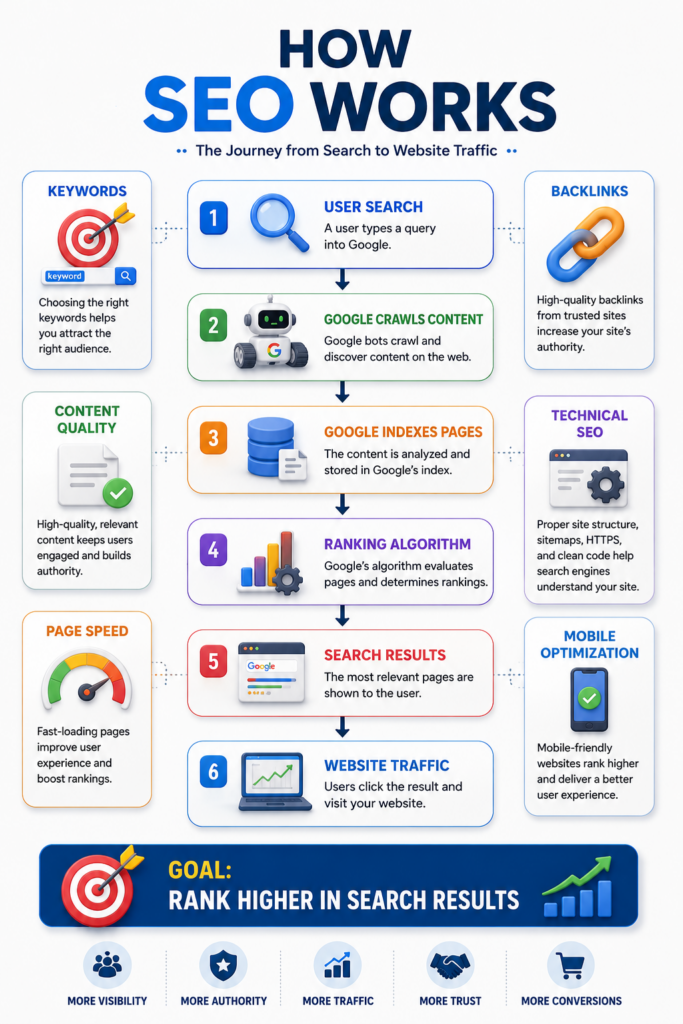
Search engines analyze various factors before deciding where a page should rank.
These include:
- Content quality
- Keyword relevance
- Backlinks
- Technical performance
- Mobile friendliness
- User experience
- Page speed
- Site structure
For example, if someone searches for “best CRM software for startups,” Google evaluates thousands of pages and ranks the most relevant and authoritative results.
Businesses that implement a strong SEO strategy increase their chances of appearing on the first page.
For additional guidance on modern SEO best practices, many marketers reference resources from Google Search Central and industry publications such as Ahrefs.
Benefits of SEO
SEO provides several long-term advantages:
- Sustainable organic traffic
- Increased brand awareness
- Better lead generation
- Higher search visibility
- Improved website authority
- Stronger customer trust
- Better return on marketing investment
Practical Takeaway
If your audience uses Google Search to discover products, services, or information, SEO remains essential for attracting consistent traffic and qualified visitors.
What Is GEO (Generative Engine Optimization)?
Generative Engine Optimization (GEO) is the process of optimizing content so that AI-powered search engines and generative AI platforms can understand, reference, summarize, and recommend it within their responses.
Instead of focusing solely on traditional rankings, GEO focuses on AI visibility.
When someone asks ChatGPT, Gemini, Perplexity, or another AI assistant a question, the AI generates a response using information gathered from trusted sources.
The goal of GEO is to increase the likelihood that your content becomes one of those trusted sources.
How GEO Works
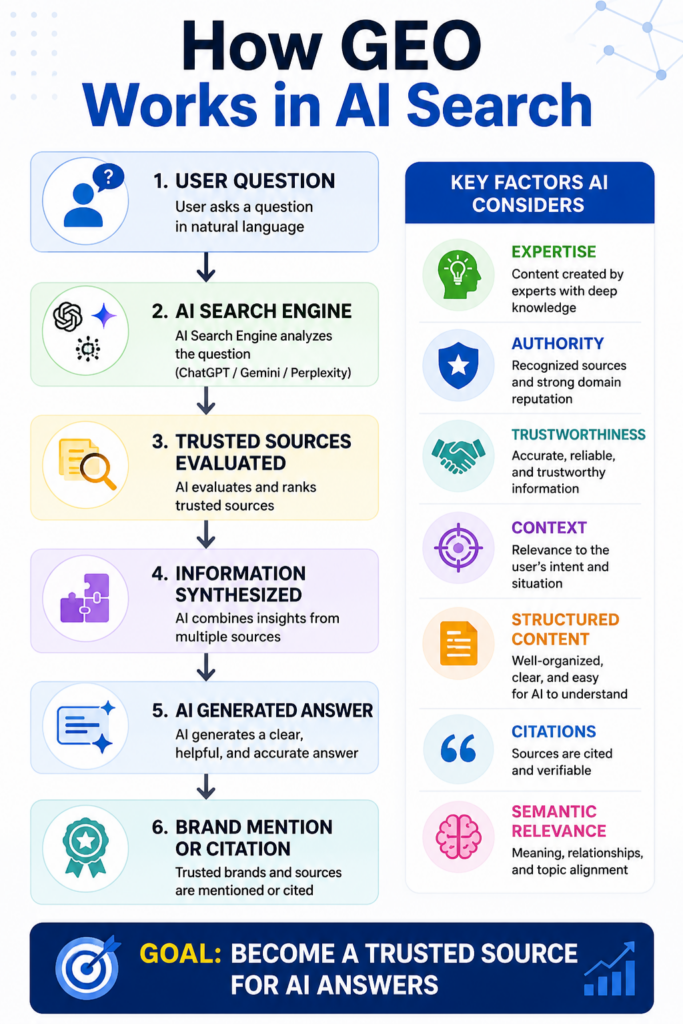
Generative AI systems evaluate content based on factors such as:
- Authority
- Credibility
- Contextual relevance
- Structured information
- Semantic relationships
- Expert insights
- Factual accuracy
- Brand mentions across the web
Unlike traditional SEO, GEO focuses less on ranking positions and more on becoming a source that AI engines trust enough to cite or reference.
Example
Imagine a SaaS company publishes a detailed guide on customer onboarding.
With strong SEO, the guide may rank on Google.
With effective GEO, the same guide may also be referenced in AI-generated answers when users ask:
“What are the best customer onboarding strategies for SaaS businesses?”
That creates additional visibility even if users never click a traditional search result.
Practical Takeaway
GEO expands your visibility beyond search engines and positions your brand within AI-generated conversations.
How AI Search Is Changing Online Visibility
AI search is fundamentally changing user behavior.
Instead of typing keywords and reviewing multiple websites, users increasingly ask complete questions.
Examples include:
- “What is the best project management software for remote teams?”
- “How can I improve Instagram lead generation?”
- “What’s the difference between GEO and SEO?”
AI systems provide direct answers instantly.
As a result, businesses must optimize content not only for search engines but also for AI-powered search experiences.
Major Platforms Driving This Shift
- ChatGPT Search: OpenAI continues expanding search capabilities, enabling users to receive conversational answers backed by web sources.
- Google AI Overviews: Google now provides AI-generated summaries directly within search results for many queries.
- Google Gemini: Gemini combines AI reasoning with Google’s information ecosystem, influencing how users discover content.
- Perplexity AI: Perplexity focuses heavily on citation-based answers, making source credibility increasingly important.
- Microsoft Copilot: Microsoft integrates AI-powered search experiences throughout its ecosystem, influencing research and purchasing decisions.
According to insights discussed by Search Engine Journal and Semrush, AI-driven search behavior is becoming a major consideration for modern digital marketing strategies.
Practical Takeaway
Businesses that ignore AI-powered search risk losing visibility even if they maintain strong traditional rankings.
GEO vs SEO: Key Differences
Although GEO and SEO share some common goals, they operate differently.
GEO vs SEO Comparison Table
| Factor | SEO | GEO |
|---|---|---|
| Primary Goal | Rank in search results | Be referenced in AI-generated answers |
| Main Platforms | Google, Bing | ChatGPT, Gemini, Perplexity, Copilot |
| Success Metric | Rankings and clicks | Citations and AI visibility |
| User Behavior | Clicking search results | Receiving direct answers |
| Optimization Focus | Keywords and backlinks | Context, authority, and trust |
| Traffic Source | Organic search traffic | AI-generated recommendations |
| Content Structure | Search-friendly pages | AI-readable and authoritative content |
| Business Impact | Website visits and leads | Brand awareness and influence |
The Core Difference
SEO helps people find your content.
GEO helps AI systems understand and recommend your content.
The two strategies complement each other rather than compete.
Why SEO Still Matters
Some marketers mistakenly believe AI search will replace SEO.
That is unlikely.
Search engines remain one of the largest traffic sources on the internet.
Reasons SEO Remains Essential
- Massive Search Demand: Billions of searches occur daily across Google and Bing.
- Strong Purchase Intent: Many users search when actively looking for products or services.
- Long-Term Asset Creation: Optimized content can generate traffic for years.
- Website Ownership: SEO drives visitors directly to assets you control.
Business Example
A software company ranking for “best CRM software for small business” can generate thousands of qualified visitors every month.
That traffic often converts into demos, trials, and customers.
Practical Takeaway
SEO remains one of the most reliable channels for sustainable growth.
Why GEO Matters More Than Ever
Generative Engine Optimization addresses a growing challenge:
What happens when users never visit search results?
Instead, they receive complete answers directly from AI systems.
Benefits of GEO
Increased AI Visibility
Your brand becomes discoverable in AI-generated responses.
Early-Mover Advantage
Many businesses still focus only on traditional SEO.
Greater Brand Authority
Being referenced by AI systems strengthens perceived credibility.
Expanded Reach
Users may discover your brand without performing traditional searches.
Business Example
A cybersecurity firm publishes detailed research reports.
Even if readers never visit the website directly, AI assistants may reference those reports when answering security-related questions.
This builds authority and brand recognition.
Practical Takeaway
GEO positions your business where future search behavior is heading.
Common SEO Mistakes Businesses Make
Many organizations invest in SEO but overlook key fundamentals.
1. Keyword Stuffing
Overusing keywords damages readability and user experience.
2. Ignoring Search Intent
Ranking matters little if content doesn’t answer user questions.
3. Poor Technical SEO
Slow websites and broken pages hurt performance.
4. Weak Internal Linking
Strategic internal linking improves navigation and authority distribution.
For example, businesses exploring audience engagement strategies may benefit from reading resources on Instagram outreach techniques available within the website’s content ecosystem.
5. Low-Quality Content
Thin content rarely performs well in competitive search environments.
Practical Takeaway
Focus on solving user problems rather than chasing algorithms.
Common GEO Mistakes Businesses Make
As GEO evolves, businesses often misunderstand how AI systems evaluate content.
1. Publishing Generic Content
AI systems prioritize content that provides unique value.
2. Lack of Expertise
Surface-level articles rarely become trusted AI references.
3. Poor Content Structure
Clear headings, summaries, and logical organization help AI systems interpret content.
4. Ignoring Brand Authority
AI engines often favor recognized and cited sources.
5. Failing to Build Digital Presence
Mentions across industry publications, communities, and trusted platforms increase credibility signals.
Practical Takeaway
GEO requires authority, expertise, and trustworthiness—not just optimization.
Why Businesses Need Both GEO and SEO
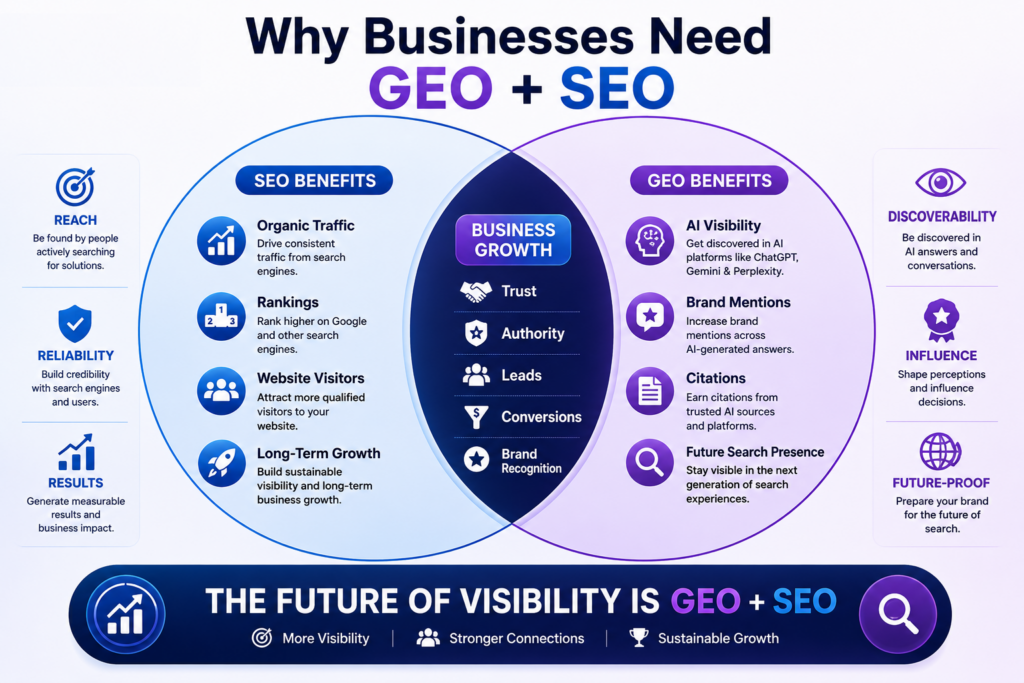
The future of visibility is not GEO versus SEO.
It is GEO plus SEO.
Together, they create a more comprehensive digital presence.
How They Work Together
SEO Generates Discoverability
Search engines help users find your content.
GEO Expands Influence
AI systems increase exposure through generated responses.
Content Serves Both Channels
High-quality content benefits both SEO and GEO simultaneously.
Authority Becomes Multipurpose
Strong authority improves rankings and AI references.
Real-World Example
A B2B marketing agency publishes a comprehensive guide about lead generation.
The guide:
- Ranks on Google through SEO.
- Gets cited by AI tools through GEO.
- Generates inquiries from direct readers.
- Builds brand credibility.
Additionally, companies that combine visibility with direct engagement can improve conversion opportunities. For instance, businesses using manual Instagram DM marketing strategies can transform awareness into authentic conversations with potential customers.
This is where solutions such as ViaDM fit naturally into the marketing ecosystem. While SEO and GEO help businesses get discovered, ViaDM enables brands to manually engage with prospects on Instagram and build genuine relationships through personalized outreach.
Actionable GEO and SEO Implementation Tips
For SEO
- Conduct keyword research regularly.
- Optimize title tags and meta descriptions.
- Improve website speed.
- Create comprehensive content.
- Build high-quality backlinks.
- Strengthen internal linking structures.
For GEO
- Publish expert-level content.
- Include original research and data.
- Answer common user questions clearly.
- Use structured headings and summaries.
- Build brand authority across trusted platforms.
- Maintain factual accuracy and credibility.
Combined Strategy
The most effective approach is creating content that:
- Solves real problems.
- Demonstrates expertise.
- Provides unique insights.
- Builds trust.
- Supports both human readers and AI systems.
Businesses can further strengthen this strategy by exploring educational resources through the company’s marketing insights and growth-focused blog content, helping align search visibility with customer engagement efforts.
Practical Takeaway
Create content for people first while ensuring it remains understandable for both search engines and AI systems.
The Future of Search Visibility
The digital marketing landscape is entering a new era.
Traditional search engines are evolving into answer engines.
Users increasingly expect:
- Instant answers
- Personalized responses
- Conversational experiences
- Trusted recommendations
As AI-powered search continues expanding, GEO will become a critical part of marketing strategies.
However, SEO will not disappear.
Instead, SEO and GEO will coexist.
Businesses that invest in both areas will gain:
- Greater visibility
- Stronger authority
- More traffic opportunities
- Better brand recognition
- Increased customer acquisition potential
The future belongs to organizations that can be found, understood, and trusted across every search environment.
Conclusion
The discussion around GEO vs SEO is not about choosing one over the other.
SEO remains essential for attracting organic search traffic, building website authority, and driving long-term growth. At the same time, Generative Engine Optimization is becoming increasingly important as AI-powered search platforms such as ChatGPT, Gemini, Perplexity, and Google AI Overviews reshape how people discover information.
Businesses that focus only on traditional search risk missing emerging opportunities in AI visibility.
The smartest approach is a combined strategy.
Use SEO to rank in search engines. Use GEO to become a trusted source for AI-generated answers. Together, they create a powerful foundation for future-ready digital marketing.
And once visibility is achieved, businesses can strengthen results through direct engagement channels. Whether through content marketing, email outreach, or personalized manual Instagram conversations using solutions like ViaDM, meaningful customer relationships remain the ultimate goal.
The future of search is not just about being found—it is about being recommended, trusted, and remembered.