Instagram has evolved far beyond a platform for sharing photos and short videos. Today, it serves as a powerful communication channel where brands can connect directly with prospects, customers, and loyal followers. For small businesses, this direct communication opportunity is especially valuable because it allows meaningful conversations without the large advertising budgets often required by traditional marketing channels.
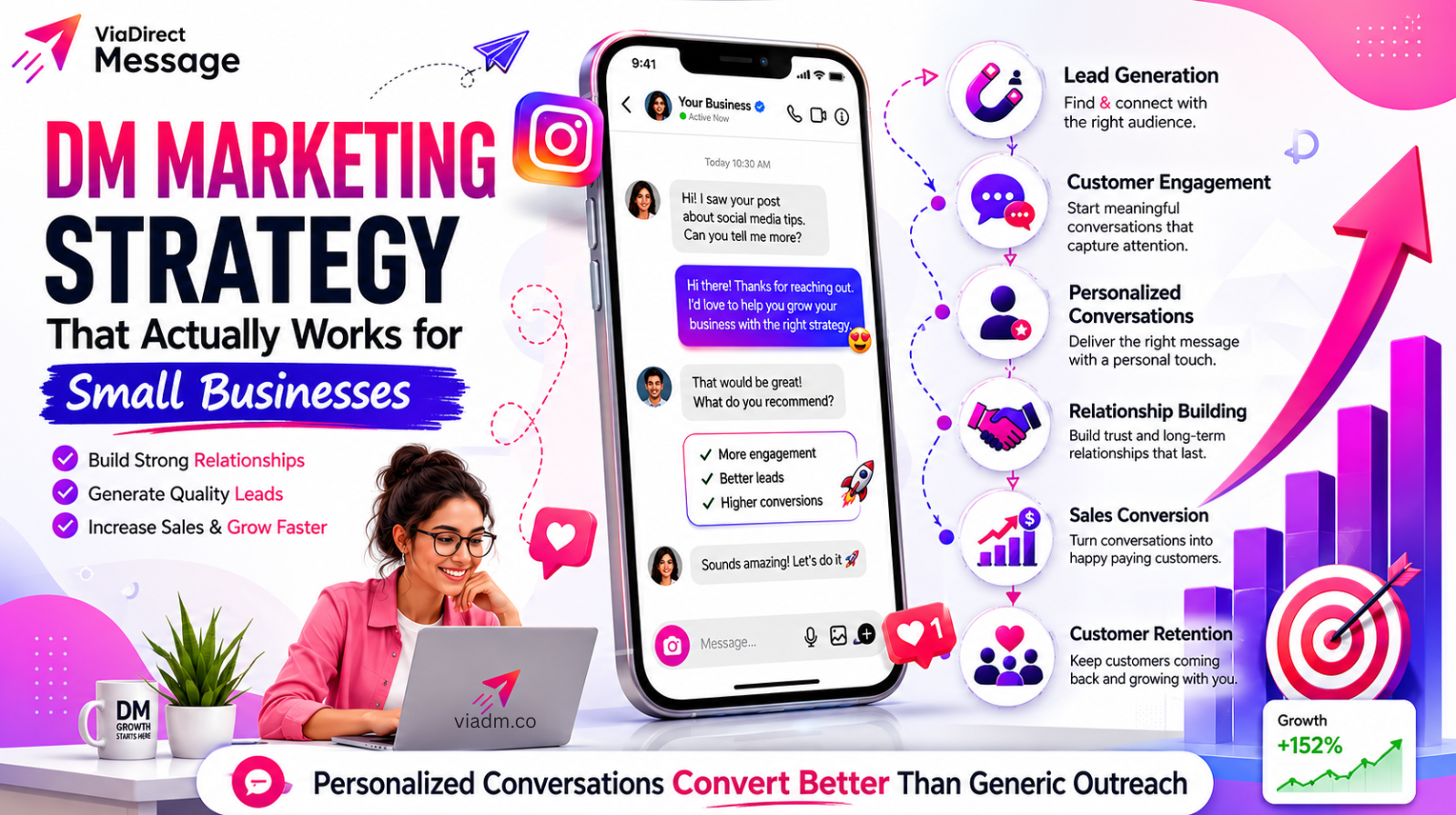
This is where a DM Marketing Strategy That Actually Works for Small Businesses becomes essential.
Unlike mass email campaigns that often go unread or generic social media posts that disappear in crowded feeds, direct messages create personal interactions. When executed correctly, Instagram DM marketing helps businesses build trust, qualify leads, increase engagement, and generate sales through genuine one-to-one conversations.
Many business owners mistakenly believe that success on Instagram depends solely on creating viral content. However, some of the highest-converting interactions happen privately in direct messages. Businesses that combine valuable content with a strategic DM outreach process often experience stronger customer relationships and higher conversion rates.
For businesses looking to improve customer engagement through personalized outreach, platforms such as Instagram DM growth solutions can help organize and streamline manual DM campaigns while maintaining authentic conversations.
In this guide, we will explore a practical DM marketing strategy, common mistakes to avoid, proven tactics, and how small businesses can use direct messaging effectively without appearing spammy.
Why Instagram DM Marketing Matters More Than Ever
Consumer behavior has changed significantly over the past few years.
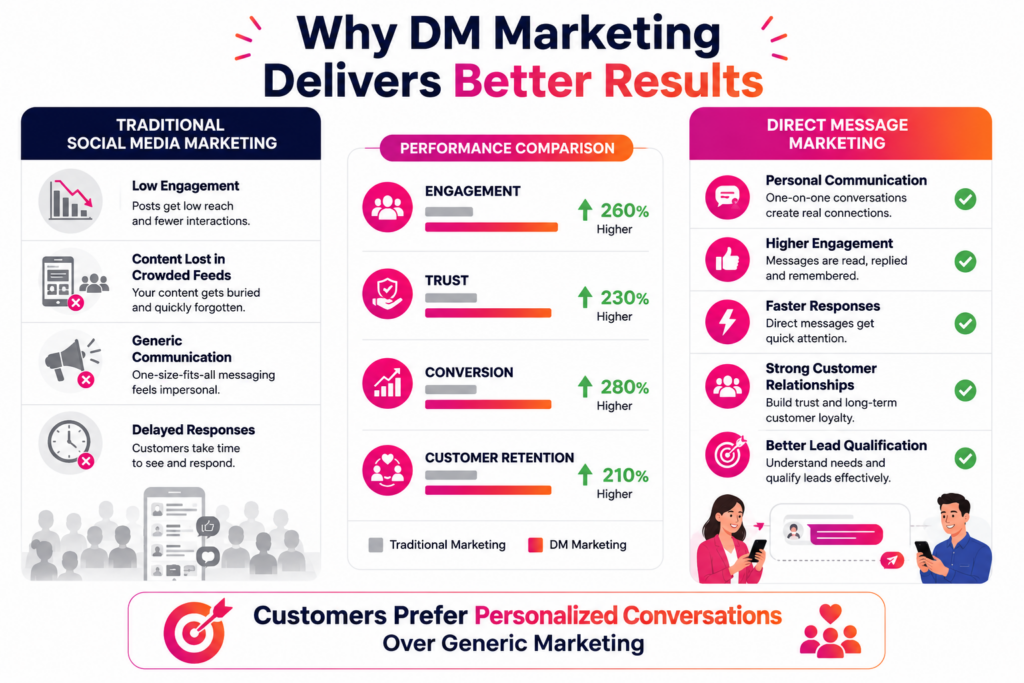
People increasingly prefer private conversations over public interactions. They want quick answers, personalized recommendations, and direct communication with brands before making purchasing decisions.
According to research from Meta and various social commerce studies, users are increasingly engaging with businesses through messaging rather than traditional contact forms.
Direct messaging offers several advantages:
- Faster customer communication
- Higher engagement rates
- Personalized customer experiences
- Better lead qualification
- Increased trust and relationship building
- Higher conversion opportunities
Unlike public comments, direct messages allow businesses to understand customer needs in greater detail and provide customized solutions.
For small businesses with limited marketing budgets, this can create a significant competitive advantage.
DM Marketing Strategy That Actually Works for Small Businesses
A successful DM strategy is not about sending hundreds of random messages.
Instead, it focuses on creating genuine conversations with people who have already shown interest in your products, services, or content.
Let’s break down the process step by step.
Step 1: Build a Highly Targeted Audience First
Before sending any direct messages, businesses must identify the right audience.
Many marketers fail because they prioritize quantity over quality.
Instead of messaging everyone, focus on users who already demonstrate interest.
Examples include:
- People who engage with your posts
- Story viewers
- Poll participants
- Existing followers
- Users who save your content
- Users who comment regularly
These individuals are far more likely to respond because they already recognize your brand.
How to Identify Qualified Prospects
Look for engagement signals such as:
- Repeated interactions
- Product-related questions
- Content shares
- Story replies
- Website visits
These signals indicate purchase intent and make outreach more effective.
Step 2: Start Conversations Naturally
One of the biggest mistakes businesses make is opening conversations with a sales pitch.
Nobody enjoys receiving messages that immediately push products.
Instead, focus on creating genuine interactions.
Effective Conversation Starters
Good examples include:
- Thanking someone for engaging with content
- Responding to a story interaction
- Answering a question they asked
- Providing helpful advice
- Sharing relevant resources
For example:
“Thanks for checking out our recent post on customer retention. What challenge are you currently facing with customer engagement?”
This approach encourages dialogue rather than resistance.
Step 3: Deliver Value Before Selling
Trust is the foundation of successful DM marketing.
If every conversation revolves around selling, prospects will quickly lose interest.
Instead, provide value first.
You can share:
- Educational content
- Industry insights
- Helpful guides
- Case studies
- Best practices
- Relevant blog resources
For instance, businesses interested in improving social media outreach may find value in resources discussing effective Instagram lead generation strategies before considering a specific solution.
Providing value establishes credibility and positions your business as a helpful expert rather than a salesperson.
The Psychology Behind Successful DM Marketing
Understanding customer psychology dramatically improves response rates.
People typically respond positively when communication feels:
- Personal
- Relevant
- Helpful
- Timely
- Authentic
Conversely, they ignore messages that appear:
- Automated
- Generic
- Aggressive
- Self-promotional
Personalization Creates Better Results
Use available information thoughtfully.
Mention:
- Shared interests
- Recent engagement
- Relevant business challenges
- Specific content interactions
This demonstrates genuine attention rather than mass outreach.
Step 4: Use Manual Outreach for Better Conversations
Many businesses attempt to scale messaging too quickly.
However, authentic engagement remains one of the most effective ways to build trust.
It is important to understand that ViaDM is a manual tool, not an automation tool.
The purpose of manual outreach is to help businesses maintain real conversations rather than relying on automated message blasts that often reduce engagement quality.
Manual messaging provides several benefits:
- More authentic interactions
- Better personalization
- Higher response rates
- Reduced risk of appearing spammy
- Stronger customer relationships
Small businesses often outperform larger competitors because they can offer more personal communication.
Common DM Marketing Mistakes Small Businesses Should Avoid
Even well-intentioned businesses can make mistakes that hurt results.
Sending Generic Messages
A message copied and pasted to hundreds of users rarely performs well.
Customers can immediately recognize generic outreach.
Pitching Too Early
Trust should come before sales.
Focus on understanding customer needs first.
Ignoring Customer Intent
Not every prospect is ready to buy.
Some need education, while others need reassurance.
Adjust your communication accordingly.
Following Up Too Frequently
Persistent follow-ups can become annoying.
Space messages appropriately and respect customer boundaries.
Lack of Clear Objectives
Every conversation should have a purpose:
- Building awareness
- Qualifying leads
- Booking consultations
- Providing support
- Driving conversions
Without clear goals, outreach becomes ineffective.
How to Turn DM Conversations into Sales Opportunities
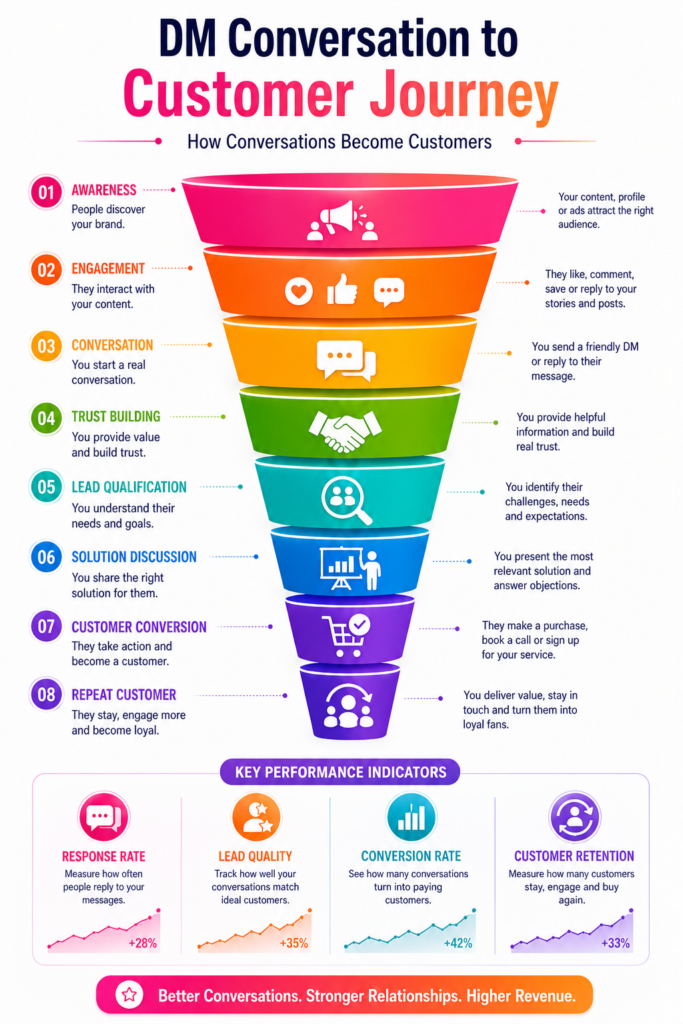
Direct messages should not feel like sales funnels.
Instead, they should guide prospects naturally toward solutions.
Ask Discovery Questions
Examples include:
- What challenge are you currently facing?
- What goals are you trying to achieve?
- What solutions have you already tried?
These questions reveal valuable information about customer needs.
Recommend Relevant Solutions
Once you understand the problem, present solutions that align with the prospect’s goals.
This creates a consultative experience rather than a sales pitch.
Use Social Proof
People trust evidence.
Share:
- Customer success stories
- Testimonials
- Results
- Case studies
Research from Harvard Business Review’s customer relationship insights consistently highlights the importance of personalized customer engagement in driving business growth.
Measuring the Success of Your DM Marketing Strategy
Without measurement, improvement becomes difficult.
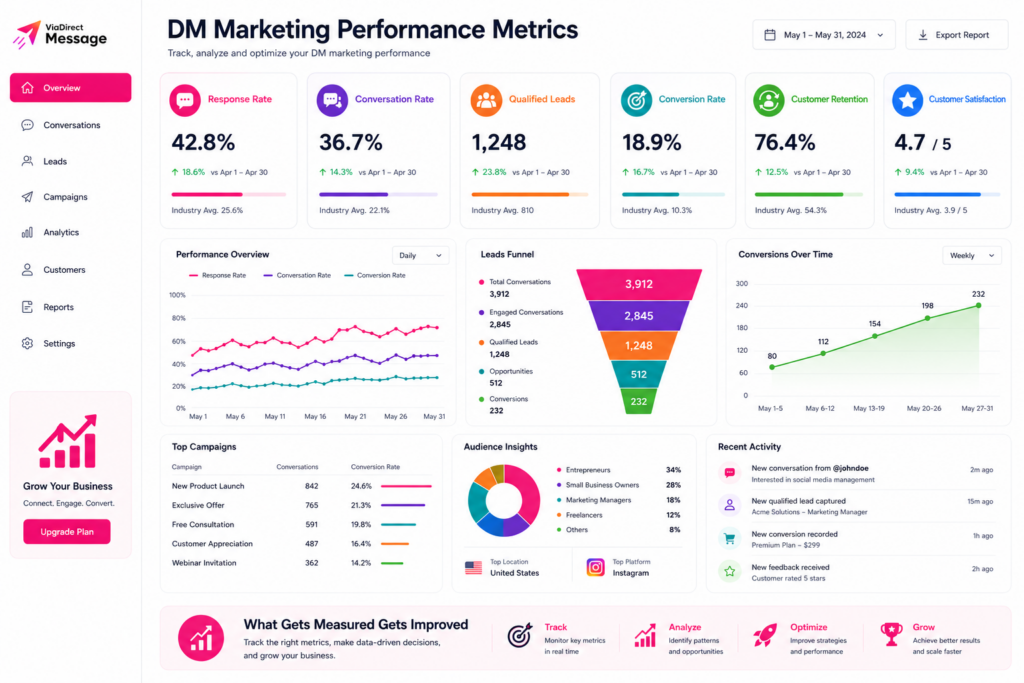
Track key metrics such as:
Response Rate
Measures how many recipients respond to messages.
Conversation Rate
Tracks meaningful conversations rather than simple replies.
Lead Qualification Rate
Measures how many conversations become qualified opportunities.
Conversion Rate
Tracks sales generated from DM conversations.
Customer Retention
Evaluates long-term relationship impact.
Regular analysis helps identify strengths and weaknesses within your outreach strategy.
Combining Content Marketing and DM Marketing
The best results often come from integrating content with direct messaging.
Content creates awareness.
DMs create relationships.
For example:
- Publish educational content.
- Encourage audience engagement.
- Identify interested users.
- Start personalized conversations.
- Provide additional value.
- Guide prospects toward solutions.
This creates a natural customer journey.
Businesses implementing this approach often achieve higher engagement because prospects are already familiar with the brand before receiving direct messages.
Building Long-Term Relationships Through DMs
Many businesses focus solely on immediate sales.
However, the greatest value often comes from long-term relationships.
Use direct messages to:
- Celebrate customer milestones
- Share relevant updates
- Provide support
- Gather feedback
- Offer educational resources
According to customer engagement research published by McKinsey & Company, personalized customer experiences significantly improve retention and lifetime value.
Relationship-focused communication creates repeat customers and brand advocates.
Creating a Sustainable DM Workflow
Consistency matters more than volume.
Develop a structured workflow that includes:
Daily Audience Monitoring
Review:
- Story interactions
- Comments
- New followers
- Profile visits
Prospect Prioritization
Focus on high-intent users first.
Personalized Outreach
Tailor each conversation based on user activity and interests.
Follow-Up Management
Track conversations and schedule appropriate follow-ups.
Performance Review
Evaluate results weekly and optimize accordingly.
Businesses seeking a structured approach to personalized outreach can explore manual Instagram DM campaign management resources to better organize conversations while maintaining authenticity.
The Future of Instagram DM Marketing
Consumer expectations continue to evolve.
Users increasingly value personalized experiences and direct communication.
As competition grows, businesses that focus on authentic relationship-building will stand out.
Future success will depend on:
- Personalized engagement
- Customer-centric communication
- Value-driven conversations
- Relationship nurturing
- Consistent follow-up
Small businesses are uniquely positioned to excel because they can provide the personal attention that many larger brands struggle to deliver.
Conclusion
A DM Marketing Strategy That Actually Works for Small Businesses is not about sending more messages—it’s about creating better conversations.
When businesses focus on genuine engagement, personalized communication, and customer value, direct messaging becomes one of the most effective channels for building relationships and generating sales.
The most successful strategies begin with understanding the audience, starting authentic conversations, delivering value before selling, and maintaining long-term relationships.
Most importantly, businesses should remember that meaningful engagement consistently outperforms mass outreach. Whether you are nurturing leads, supporting customers, or growing brand awareness, a thoughtful DM strategy can become a powerful growth engine for your business.
Organizations looking to strengthen their personalized outreach efforts can benefit from exploring practical Instagram messaging best practices while continuing to prioritize authentic human conversations over impersonal mass messaging.